
Business
TDS and the Loss
TDS and the Loss of Humor
When Politics Stops Being Playful and Starts Becoming Personal
By ~Michael T. Ruhlman
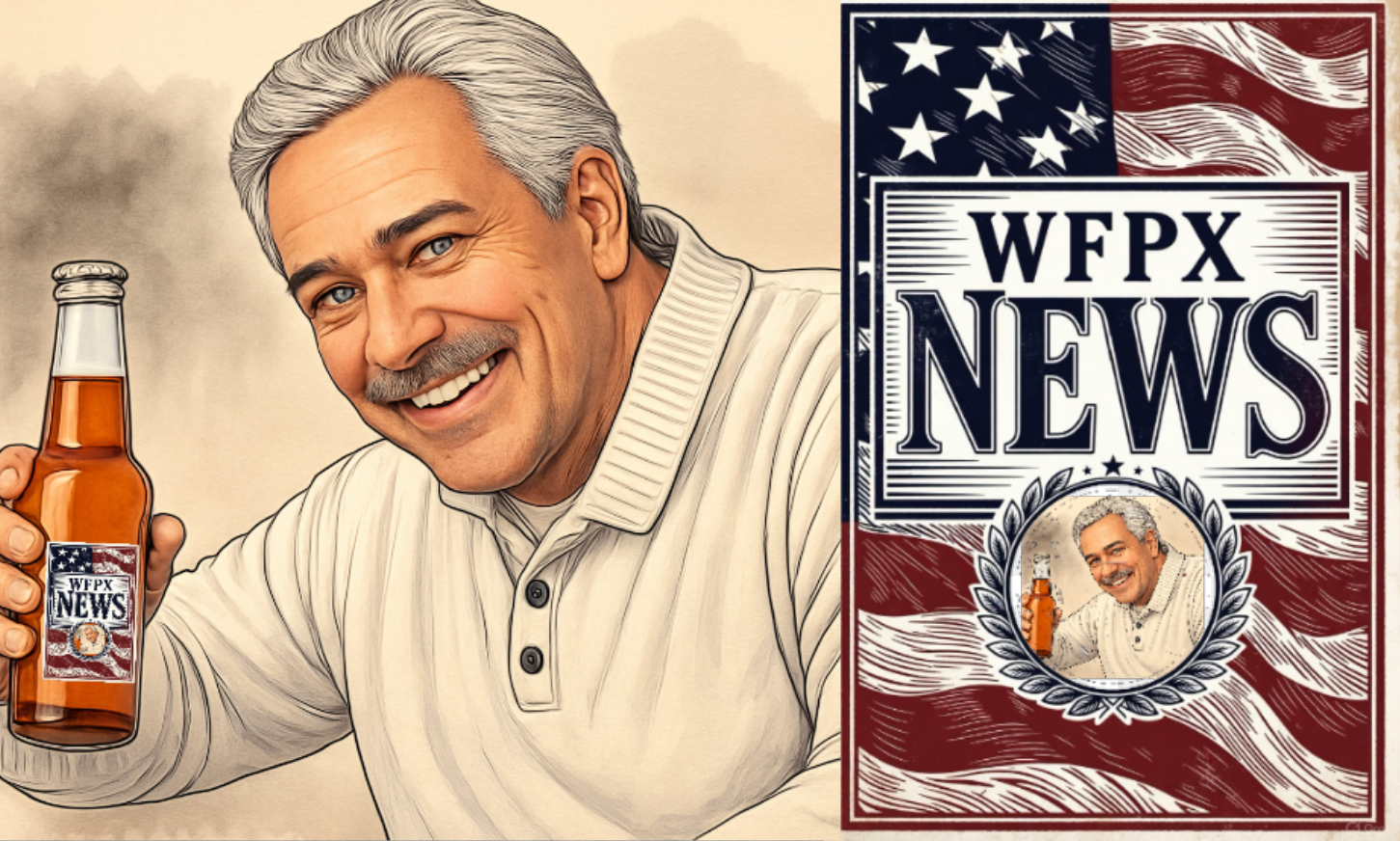
~Michael T. Ruhlman
There was a time in America when political disagreement still left room for laughter.
Not agreement. Not surrender. Not ideological compromise.
Laughter.
A kind of national elasticity where people could argue fiercely, then still share a table, a joke, or a raised eyebrow at the absurdity of the whole machine.
That elasticity feels thinner now.
The phrase “Trump Derangement Syndrome” — whether one likes the term or hates it — became culturally important not merely because of Donald Trump himself, but because it named something larger: the emotional totalization of politics.
Everything became existential.
Every disagreement became moral warfare.
Every joke became evidence.
Every silence became suspicion.
And humor cannot survive long inside permanent emergency conditions.
Humor requires distance. Perspective. Proportion.
The ability to momentarily step outside oneself and observe human contradiction without immediately converting it into tribal combat.
But modern political identity increasingly discourages that distance.
To laugh at your own side risks betrayal.
To laugh at the other side risks cruelty.
So people stop laughing honestly altogether.
Instead, they perform outrage. Or perform irony. Or weaponize sarcasm without affection.
That distinction matters.
America once specialized in what might be called affectionate friction:
- teasing without exile
- disagreement without annihilation
- banter without ideological screening
- wit without institutional punishment
Now many conversations feel pre-lawyered before they even begin.
People monitor tone. Signal allegiance. Audit vocabulary. Calculate social consequences in real time.
The result is not merely political exhaustion.
It is relational exhaustion.
Because humor has always functioned as social lubrication for imperfect civilizations.
A society that loses the ability to joke with itself often loses the ability to correct itself peacefully.
And this is where the discussion becomes larger than Trump.
TDS, whether used seriously or mockingly, revealed something profound:
Millions of Americans no longer see political opposition as mistaken. They see it as psychologically illegitimate.
Possibly evil.
Possibly diseased.
That framing changes everything.
Once opponents become pathologies, persuasion disappears.
Humor disappears shortly after.
Because humor depends on recognizing shared humanity beneath disagreement.
Without that shared humanity, every joke becomes either propaganda or insult.
Even comedy itself changed.
Late-night television increasingly stopped functioning as comedic observation and became political liturgy for audiences seeking emotional reinforcement rather than surprise.
The audience no longer wanted tension.
They wanted confirmation.
And confirmation is structurally hostile to humor.
Real humor contains risk. Unexpectedness. Even self-implication.
The funniest observations usually expose truths about ourselves first.
That is why older American comedy often felt broader, stranger, and more durable.
It mocked systems, classes, habits, vanity, ego, bureaucracy, marriage, religion, masculinity, femininity, ambition, and hypocrisy — often all at once.
Modern political culture increasingly permits only directional humor.
Approved targets. Approved ridicule. Approved outrage.
But controlled humor eventually stops being humor.
It becomes messaging.
And messaging rarely ages well.
The deeper danger here is not simply that America became too angry.
It may be that America became too emotionally fragile.
Too unable to withstand ambiguity.
Too unable to survive being teased.
Too unable to separate disagreement from existential rejection.
A healthy civilization requires some capacity for good-natured ribbing.
Not because problems are unimportant.
But because human beings are finite, flawed creatures trying to navigate enormous systems while carrying insecurity, ego, fear, hope, and exhaustion all at once.
Humor reminds us we are not gods.
Only participants.
And perhaps that is part of why banter matters more than people think.
Banter is not trivial.
It is evidence of relational confidence.
The ability to spar lightly without fear of annihilation.
The ability to laugh without needing total victory.
The ability to remain human while disagreeing.
America may not need less conviction.
It may need more emotional resilience surrounding conviction.
The kind that allows a nation to argue intensely without converting every disagreement into psychological warfare.
Because once a civilization loses the ability to laugh together, it usually begins preparing to separate permanently instead.
Written by ~Michael T. Ruhlman for WFPX Communications & Publishing.
Disclaimer: This article is an opinion and cultural commentary piece intended for discussion, analysis, and editorial reflection. References to public figures, political terminology, and cultural movements are used for commentary purposes only. The views expressed are those of the author.
Reprint Rights: Reprint permission is granted only with full attribution to the author and source publication. Excerpts may be quoted with proper credit and a link back to the original publication when applicable.
Copyright: © 2026 WFPX Communications & Publishing. All Rights Reserved.